


25 Aug Six strings, a Neapolitan story

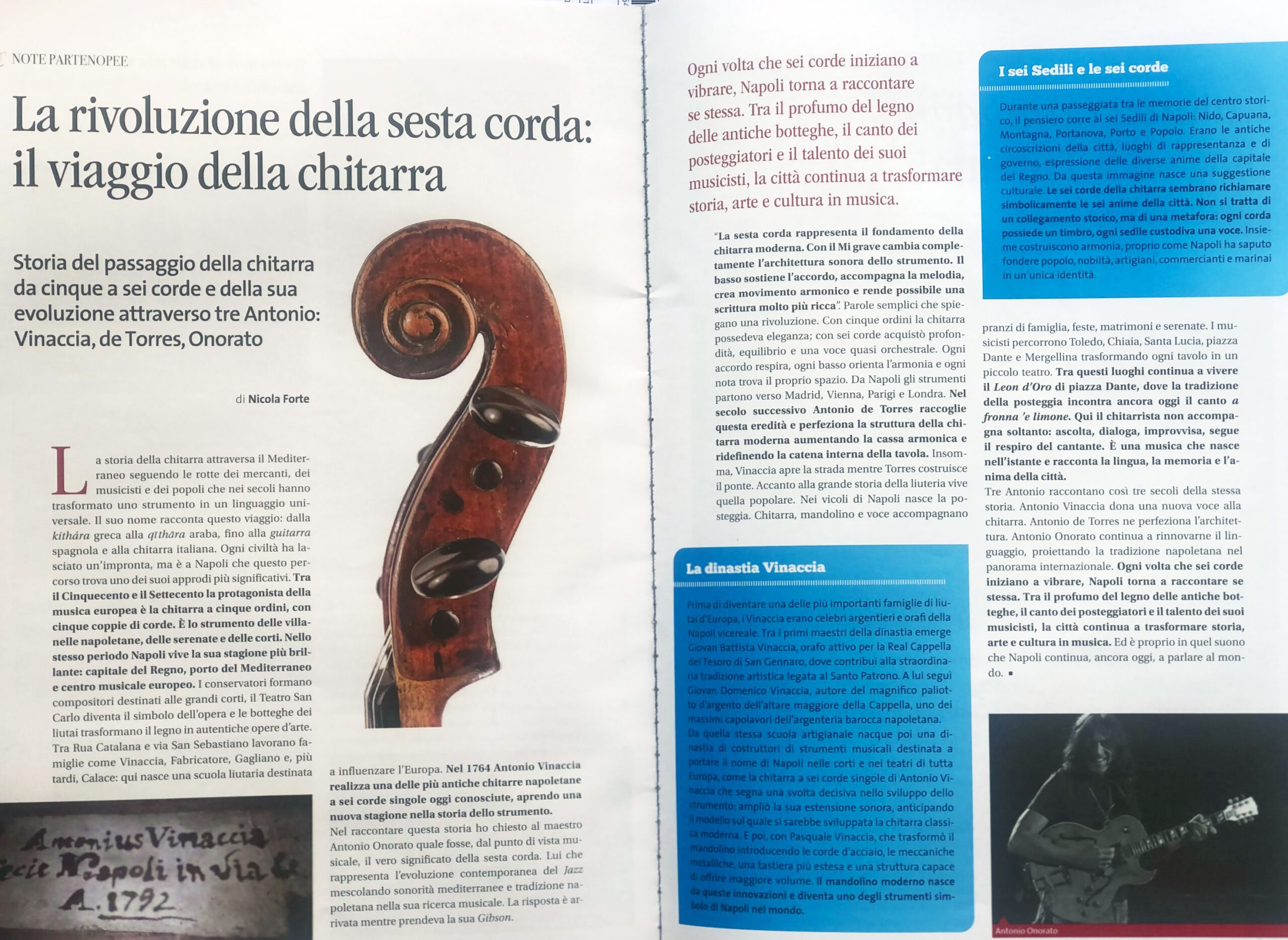
A journey through the history of the guitar, from its Mediterranean origins to its modern evolution, told through three figures connected by both name and music: Antonio Vinaccia, Antonio de Torres, and Antonio Onorato.
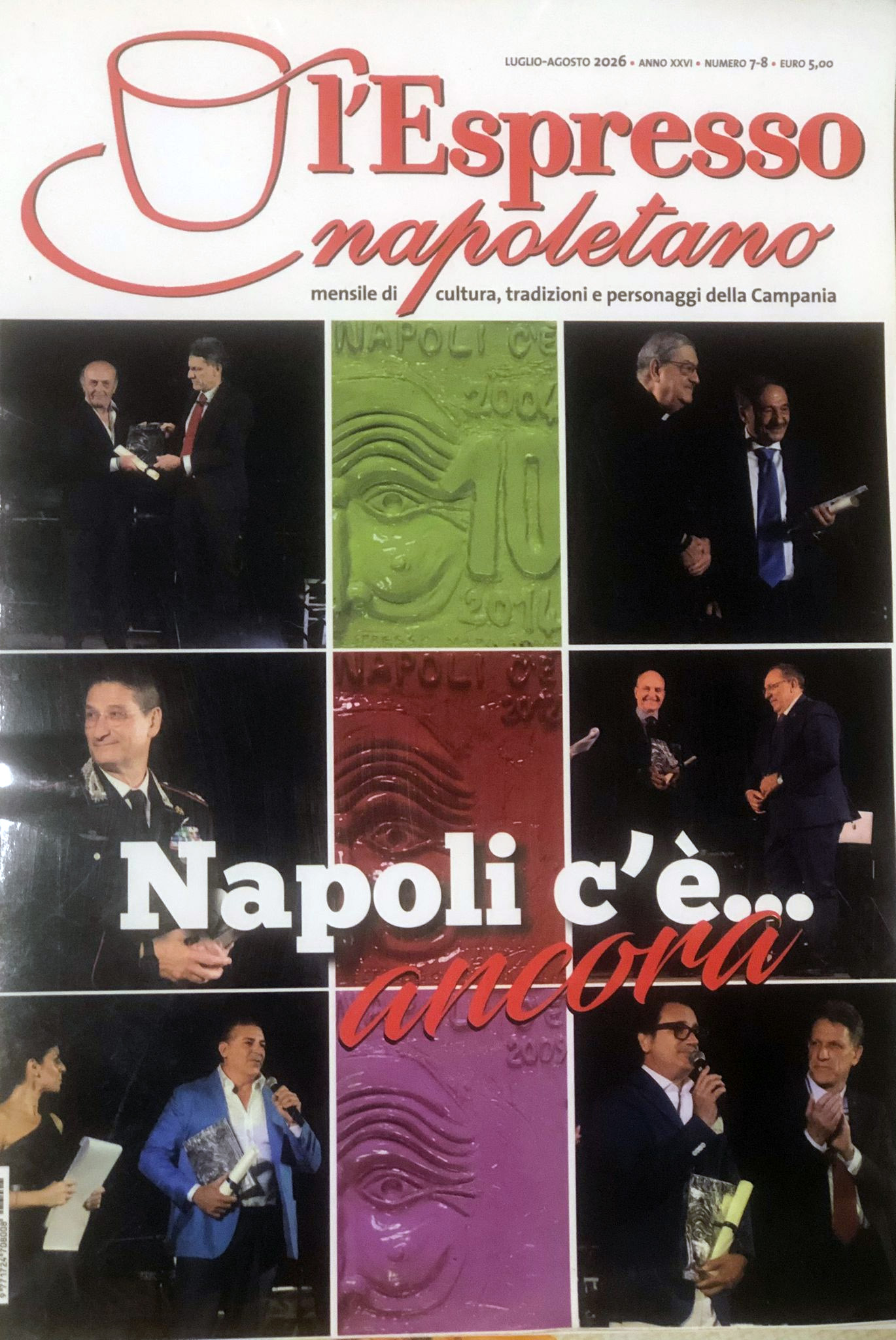
This is the path traced by Nicola Forte in the article “La rivoluzione della sesta corda: il viaggio della chitarra” (“The Revolution of the Sixth String: The Guitar’s Journey”), published in the “Note Partenopee” section of issue no. 7–8 of the bimonthly magazine L’Espresso Napoletano (July–August 2026 edition).
At the heart of the article there is the transformation of the guitar from five to six strings — a turning point in the instrument’s history to which the Neapolitan tradition made a fundamental contribution. In 1764, Antonio Vinaccia built one of the oldest known Neapolitan guitars with six single strings, anticipating a development that would reach its culmination in the following century with the definition of modern classical-guitar construction techniques by the Spanish luthier Antonio de Torres.
Forte also recounts Naples’ extraordinary tradition of guitar making, from the Vinaccia workshops to the posteggia tradition, and explores the relationship between the guitar and the city’s musical identity.
The journey concludes with Antonio Onorato, a contemporary performer who brings Neapolitan tradition into jazz and international musical research. The sixth string thus becomes a symbol of continuous evolution: from tradition to experimentation, without ever losing its connection to Naples.
Three Antonios, six strings: a musical story that begins in Naples, spans the centuries, and continues to resonate around the world.